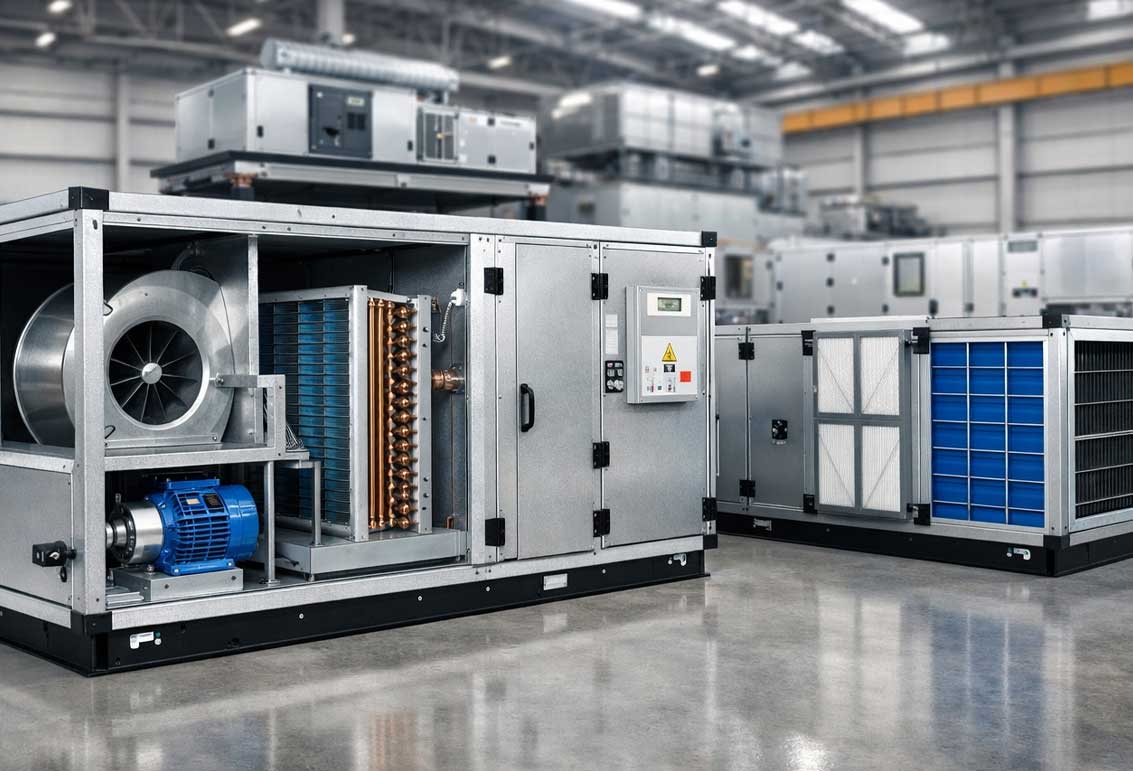
Most people don’t spend much time thinking about the air handler in their home or business. It’s usually tucked away in a closet, attic, basement, or mechanical room, quietly moving conditioned air through the building.
But when something goes wrong, the air handler quickly becomes impossible to ignore.
Rooms may feel unevenly heated or cooled. Airflow can become weak. The system might run longer than expected, and energy costs may creep upward. In some cases, strange noises or moisture around the indoor unit can be the first clue that something needs attention.
The good news is that proper installation, timely repairs, and regular care can help keep the system dependable.
Why the Air Handler Matters
An air handler is an important part of many HVAC systems. Depending on the equipment, it may contain a blower motor, evaporator coil, air filter, electrical controls, and other components.
Its basic responsibility is to circulate conditioned air throughout the building.
That sounds simple, but airflow has a direct effect on comfort and performance. If air can’t move properly, the heating or cooling equipment may need to run longer to achieve the desired temperature.
That’s one reason homeowners shouldn’t focus only on the outdoor unit when an HVAC system isn’t performing well.
The Value of Custom Air Handler Installation
Every property is a little different. A compact home, large house, office, retail space, and warehouse don’t have identical airflow requirements.
Professional custom air handler installation takes those differences into account.
A technician can consider the building’s size, ductwork, insulation, existing heating and cooling equipment, airflow requirements, electrical capacity, and comfort needs when selecting and installing the air handler.
Correct sizing is especially important. An improperly matched unit may contribute to poor airflow, inconsistent temperatures, unnecessary cycling, or reduced efficiency.
Installation also involves more than setting the equipment in place. Connections, drainage, controls, duct transitions, and other components need to be properly configured.
When the installation is done carefully, the entire HVAC system has a better chance of operating as intended.
Signs Your Air Handler Needs Attention
Air handler problems don’t always begin with a complete breakdown.
You might notice that certain rooms aren’t receiving enough air. The blower could suddenly become louder. There may be an unusual smell, water near the indoor unit, or a noticeable increase in how long the system runs.
Other warning signs can include:
- Weak or inconsistent airflow
- Strange buzzing, rattling, or squealing
- Frequent cycling
- Poor heating or cooling
- Unexplained moisture around the unit
- Increasing energy consumption
- Uneven temperatures throughout the property
None of these symptoms automatically identifies the exact problem. But they’re good reasons to have the system inspected.
Why Fast, Reliable Repairs Matter
When an HVAC system stops working, waiting several days for service isn’t always practical. During extreme weather, even a short outage can become uncomfortable quickly.
That’s why fast, reliable repairs matter.
A qualified technician can inspect the air handler and determine whether the problem involves the blower motor, electrical components, drainage, airflow, controls, or another part of the system.
Sometimes the repair is relatively simple. Other times, a major component may need replacement.
The important thing is getting an accurate diagnosis rather than guessing.
And speed shouldn’t come at the expense of quality. A quick repair that fails again a week later isn’t much of a solution.
System Efficiency Starts With Airflow
When people talk about system efficiency, they often focus on the efficiency rating of the HVAC equipment.
That’s important, but it’s only part of the equation.
Dirty filters, restricted ducts, blocked vents, failing blower components, and poor installation can all affect how efficiently the system operates.
For example, a clogged filter can restrict airflow and force the blower to work harder. Leaky ductwork can allow conditioned air to escape before it reaches the room. A poorly matched air handler can create airflow problems that affect the entire system.
Efficiency is therefore a system-wide issue.
Simple Maintenance Shouldn’t Be Forgotten
Homeowners can do a few basic things to support air handler performance.
Check the filter regularly and replace it according to the manufacturer’s recommendations. Keep return and supply vents unobstructed. Don’t store boxes or other items directly around equipment that requires clear access.
It’s also worth paying attention to the area around the indoor unit. Unusual moisture, odors, or sounds shouldn’t be ignored.
Professional maintenance can go deeper by checking electrical connections, blower components, coils, drainage, airflow, and other parts.
Repair or Replace?
When an air handler develops a problem, the question often becomes whether to repair it or replace it.
Age is one factor, but it isn’t the only one.
Consider the repair cost, previous repair history, condition of other HVAC components, energy performance, availability of replacement parts, and expected remaining service life.
A relatively new air handler with one failed component may be an obvious repair candidate. An older system experiencing repeated problems could make replacement more sensible.
A professional evaluation can help you compare the options without making the decision based purely on emotion.
Don’t Forget the Rest of the HVAC System
The air handler doesn’t operate independently.
It works alongside other components, including the heating or cooling equipment, ductwork, thermostat, electrical system, and drainage.
If airflow is poor, replacing only one component may not solve the underlying problem.
For example, damaged ductwork can continue causing comfort issues even after a new air handler is installed.
That’s why a good technician looks at the entire system rather than treating one symptom in isolation.
A Better Air Handler Means Better Everyday Comfort
You may never see your air handler, but you’ll certainly notice when it isn’t doing its job.
Proper installation, prompt repairs, regular maintenance, and attention to airflow can help keep the HVAC system reliable and comfortable.
If your current system is struggling, don’t immediately assume you need a complete replacement. Start with an inspection and find out what’s actually happening.
Sometimes the solution is a simple repair. Sometimes it’s a new air handler designed specifically for the property.
Either way, making an informed decision can save money, reduce frustration, and help your HVAC system deliver the comfort you expect — quietly, efficiently, and day after day.